

Poolside Flames That Redefine Outdoor Living
Fire Features in City unavailable for pool remodels that need visual focal points and functional warmth
Good Times Pool Company integrates fire features into pool remodels to add both warmth and visual impact to outdoor spaces. If your existing pool area feels incomplete or lacks a gathering point, adding fire transforms the space into a destination. Fire features create a focal point that draws attention away from dated pool finishes or awkward layouts while providing functional heat during cooler evenings.
Fire features range from simple fire bowls positioned along pool edges to built-in fire pits incorporated into raised seating walls or custom fire-and-water combinations where flames emerge from water surfaces. The type you choose depends on your remodel goals, the existing hardscape layout, and whether you want fire as a decorative accent or a functional heat source for extended outdoor use.
Schedule a property evaluation to identify where fire features integrate best with your current pool layout and remodel plans.
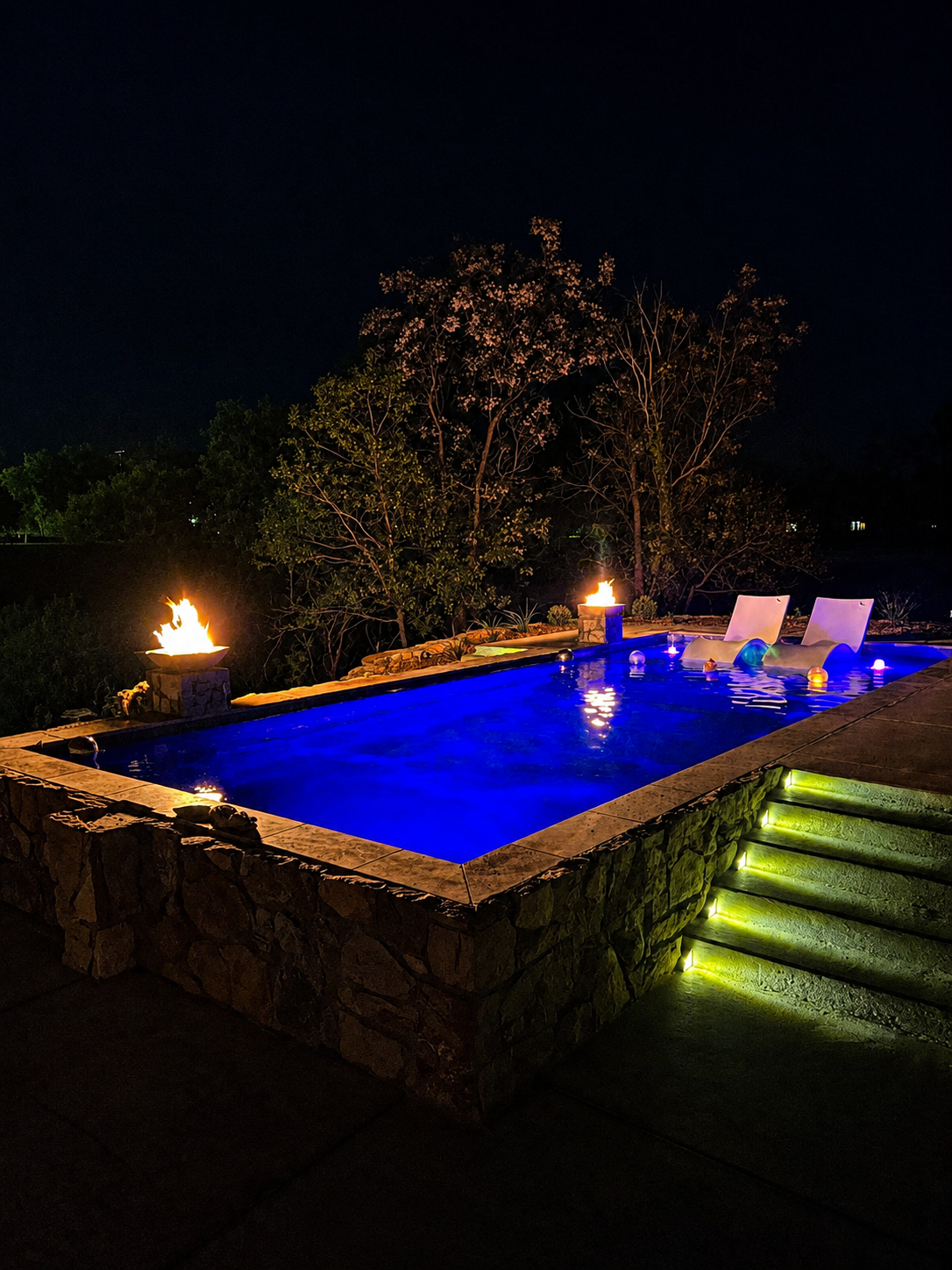
How Fire Changes the Function of Your Pool Area
Adding fire during a remodel involves more than placing a decorative element near the water. Gas lines must be run to the feature location, which requires trenching through existing hardscape or coordinating with other remodel work like coping replacement or deck resurfacing. Fire bowls require stable mounting surfaces, while fire pits need proper ventilation and clearance from combustible materials. The placement determines whether fire serves as a background accent or a central gathering point where seating naturally orients.
Once installed, fire features visibly alter how your pool area functions after dark. Flames provide ambient light that reduces reliance on overhead lighting, creating softer illumination that highlights water movement and architectural details. The heat extends the usable season for outdoor spaces, allowing you to sit poolside comfortably when temperatures drop. Fire also anchors seating arrangements, turning empty deck space into a defined zone where people naturally gather.
Fire features require annual maintenance that includes burner inspection, gas line checks, and ignition system testing. Wind guards or glass panels can be added to protect flames in exposed locations, and electronic ignition systems eliminate the need for manual lighting. The fuel type—natural gas or propane—affects both installation complexity and operating cost, with natural gas requiring permanent line connection and propane offering more placement flexibility.
What to Know Before Adding Fire
Fire features raise questions about safety, placement, and how they fit into a broader remodel scope.
What placement works best for fire features during a pool remodel?
Fire features should be positioned where they complement new pool finishes and hardscape while maintaining safe clearance from combustible surfaces. Placement near seating walls or at the far end of the pool creates a visual anchor without interfering with swim areas.
How do fire features integrate with other remodel work?
Fire installation coordinates with plumbing, electrical, and hardscape phases of the remodel. Gas lines are trenched before final deck surfaces go down, and fire bowls or pits are set into freshly poured concrete or mounted onto new coping, ensuring clean integration without patching or retrofitting.
What type of fire feature provides both warmth and visual impact?
Fire pits built into seating walls offer radiant heat for nearby guests, while fire bowls and scuppers create dramatic visual effects with less functional warmth. Fire-and-water combinations—where flames emerge from spillways or pool edges—add theatrical impact but require precise engineering to prevent wind interference.
How does wind affect fire features in open pool areas?
Wind can blow flames toward guests or extinguish smaller burners entirely. Glass wind guards or enclosed fire pit designs protect flames without blocking the view, and burner types with higher BTU output maintain flame stability in exposed locations.
What maintenance does a fire feature require after installation?
Annual inspections verify gas line integrity, burner performance, and ignition system function. Burners should be cleaned of debris, and control valves tested for leaks. Propane systems require tank monitoring and refills, while natural gas features need less frequent attention beyond seasonal checks.
Good Times Pool Company incorporates fire features into remodels where they serve a defined purpose within the overall design. Request a detailed estimate to review fire options that align with your remodel scope and how placement affects other planned upgrades.